Couldn't load pickup availability
💰 180-day money-back guarantee

Qavunexi™ Chromatic Lab
Desktop Creative Color Mixing Station
Create Your Own Color Language
Develop a palette that belongs to your work—and keep the recipes that bring it together.
Chromatic Lab combines controlled colorant dispensing, weight feedback, low-speed mixing, saved formulas, and physical swatch organization in one desktop station.
From model painting to material studies, turn individual color experiments into a collection you can revisit.
Make Color Part of Your Craft
A muted green for a sculptural object. A slate blue for a model. A terracotta shade that connects an entire collection.
Chromatic Lab gives these choices a more organized process. Measure compatible colorants, bring the blend together, and test it on a physical sample before applying it to your project.
Mix with intention. Test on the surface. Keep what works.
A Complete Color Development Workflow
-
Controlled dispensing for compatible colorants.
-
Weight feedback to track additions as you work.
-
Low-speed mixing to combine suitable formulations.
-
Saved recipes to retain useful blend information.
-
Numbered swatches to connect a physical sample with its formula.
A Measured Start to Every Mix
Build the blend one addition at a time.
Controlled dispensing helps organize the quantities added to your mixing vessel, giving each experiment a measurable starting point.
Develop a new shade gradually, evaluate a sample, and adjust the recipe as needed.
Use only colorants with a formulation and viscosity supported by the equipment.
Follow Every Addition
Weight feedback helps you track the material added to each batch.
As you explore a blend, keep a record of ingredient quantities rather than relying only on visual estimates. This gives you a clearer reference when adjusting a recipe or preparing another batch.
A useful formula begins with knowing what went into it.
Bring Your Formula Together
The low-speed mixing stage combines compatible colorants in a dedicated vessel.
Keep the process visible as the ingredients blend, then evaluate the mixture using a test application on your intended surface.
Mixing time and settings should follow the requirements of the materials used.
Save the Formula. Return to the Color.
Give a successful blend a name.
Save useful recipes so the quantities behind a shade remain available for future projects.
A recipe ID can link the blend to a project, collection, or physical sample—helping you build continuity across your studio work.
The saved recipe provides a repeatable starting point. Always test a fresh batch, as material lots, substrates, and drying conditions can affect the final appearance.
Build a Color Archive of Your Own
A screen cannot replace seeing color on a real surface.
Pair a physical swatch with its recipe ID, material notes, and application details. Keep samples together so you can compare textures, finishes, and dried colors when planning another piece.
Your archive can grow with every project:
Named shades. Numbered recipes. Real samples. Notes worth keeping.
Storage trays and archive accessories shown are illustrative; included items depend on the selected configuration.
Your Palette, Put to Work
Model Painting
Develop coordinated shades for architectural models, display pieces, and creative prototypes.
Art and Surface Studies
Explore color relationships across compatible boards, samples, and decorative objects.
Small Studio Collections
Build a recognizable palette that connects different pieces within the same body of work.
Choose colorants and coatings appropriate for both the machine and your intended surface.
From First Mix to Studio Reference
-
Load compatible colorants and prepare a clean mixing vessel.
-
Select a saved formula or begin a new measured blend.
-
Track additions using weight feedback.
-
Mix according to the material requirements.
-
Apply a test swatch and evaluate it after drying.
-
Save the recipe and label the physical sample.
Clean contact components as instructed before changing materials or colors.
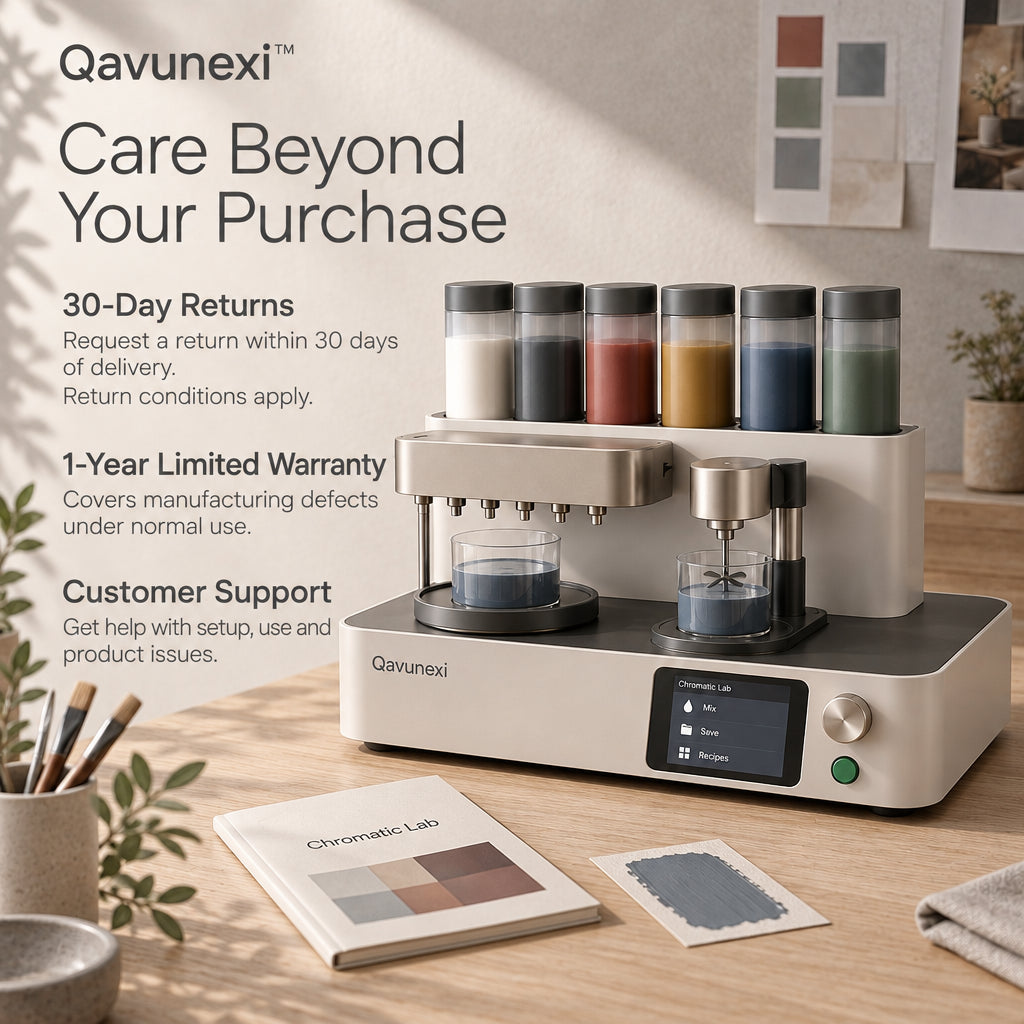
Care Beyond Your Purchase
Keep your operating instructions and recipe records available for everyday use.
Return conditions and warranty coverage follow the store’s published policies.
Make Your Next Color Worth Remembering.
Build a palette with a story—and a formula—with Qavunexi™ Chromatic Lab.